Why Healthcare Marketing Needs to Be Braver with Creative Campaigns
The sector that deals in human lives every day has forgotten how to speak to humans. Here is why bold, emotionally intelligent creative content is the prescription healthcare advertising desperately needs.
12 minutes

The sector that deals in human lives every day has forgotten how to speak to humans. Here is why bold, emotionally intelligent creative content is the prescription healthcare advertising desperately needs.
There is a strange paradox at the heart of healthcare marketing. The sector works with the rawest, most emotionally charged material imaginable: pain, fear, hope, recovery, loss. Yet so much of its creative content remains locked in a world of stock photography, clinical typography, and language designed to reassure a legal team rather than move a person. An industry that depends on human connection to function is often deeply reluctant to produce healthcare advertising that actually connects.
The barrier is rarely budget. It is bravery.
Healthcare professionals are, before anything else, people. They chose their careers because something moved them. They read journals and attend conferences, but they also cry at films, get goosebumps listening to music, and feel the gut-punch of a perfectly told story just like anyone else. When they encounter creative campaigns about the conditions they treat or the patients they care for, they do not suddenly become information-processing machines. They respond to emotion, to beauty, to something that feels true.
So why does so much healthcare creative work still speak to them as though they do not?
The Real Cost of Playing It Safe in Healthcare Advertising
The default mode of healthcare communications is caution. Regulatory pressures, the fear of trivialising serious conditions, and the risk of misjudging tone are all genuine concerns. Taken too far, however, this caution produces healthcare advertising that says nothing to anyone: technically accurate, emotionally inert, and scrolled past at speed by the very professionals it was made for.
The consequences extend well beyond aesthetics. When awareness campaigns fail to land, conditions go undiagnosed for longer. When charity appeals feel generic, donations dry up. When internal communications are forgettable, behaviour does not change. Some creative studios and healthcare marketing agencies are already working differently, and the results show exactly what becomes possible when healthcare advertising trusts its audience to feel something.
The Power of Imagination: Savage Films and Emmie's Books
Emmie's Books is a UK charity founded by the parents of Emmie, who was diagnosed with a Malignant Rhabdoid Tumour, a rare and aggressive form of cancer, at just two years old. Emmie survived. Her parents, both teachers, understood what books had given their family during treatment: a sense of normality, escapism, and the vital feeling that the world extended beyond a hospital ward. The charity now donates books to children with cancer and other serious illnesses across the UK, reaching patients at Great Ormond Street, The Royal Marsden, and The Queen Elizabeth Hospital.
For Childhood Cancer Day in February 2024, Ogilvy Health UK partnered with Emmie's Books to produce "Better With Books," an animated film directed Alex Black at and produced by Savage Films. Drawn entirely by hand and animated with warmth and precision, the film follows a child in hospital who opens a book and is immediately transported: riding fantastical creatures through vivid skies, encountering other children in hospital gowns reimagined as adventurers, their fear replaced by wonder.
The decision to use hand-drawn animation was a defining creative choice. The team selected a visual language that mirrored exactly what the healthcare campaign was arguing for: the boundless, shape-shifting power of imagination. The film closes with the line "For children with cancer, adventure is only a book away," grounded in research from the National Academy of Sciences showing that reading reduces pain and increases positive emotions in hospitalised children. Science and storytelling, held together by genuine craft.
Emmie's mother, Lyndsay, described how reading before bedtime transported her family to a world where, for a small moment, everything felt normal again. In the context of paediatric oncology, that is a profound outcome for a creative content campaign to achieve.
Making the Invisible Visible: POP Creative Studio, TEM-PLE and EDS
Where the Emmie's Books campaign shows how healthcare advertising can restore hope through the power of storytelling, the work POP Creative Studio produced for TEM-PLE demonstrates how brave creative campaigns can force a reckoning with conditions that medicine has long struggled to see.
Ehlers-Danlos Syndromes (EDS) affect an estimated one in 500 people, yet the average time to diagnosis remains around 12 years. Twelve years of being told it is growing pains, or fibromyalgia, or that the symptoms are somehow imagined. The medical profession's slow recognition of EDS is rooted in a fundamental problem: it is a condition that is very difficult to see.
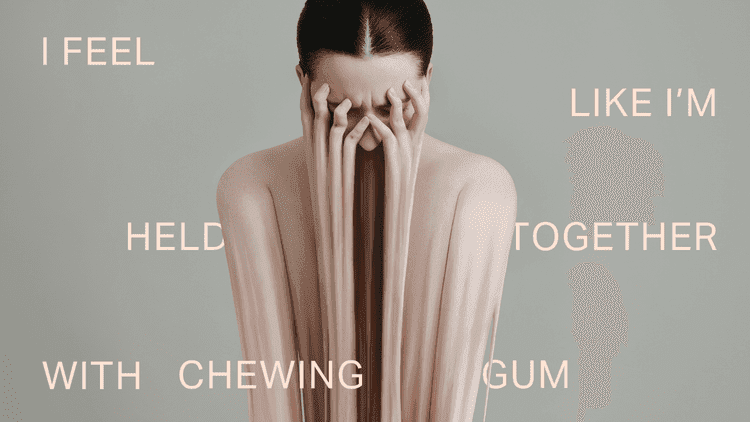
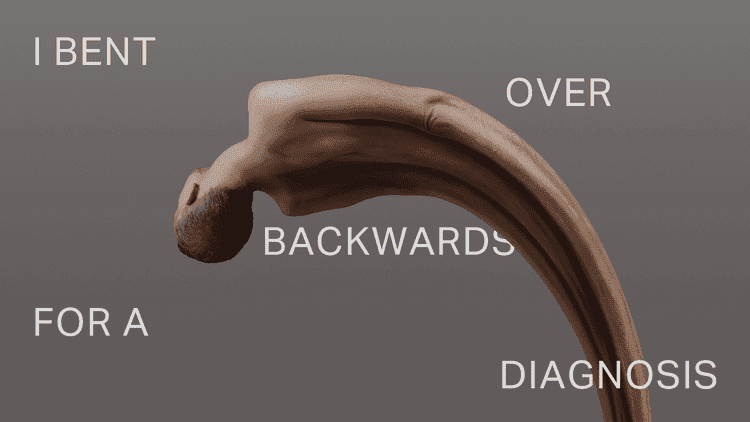
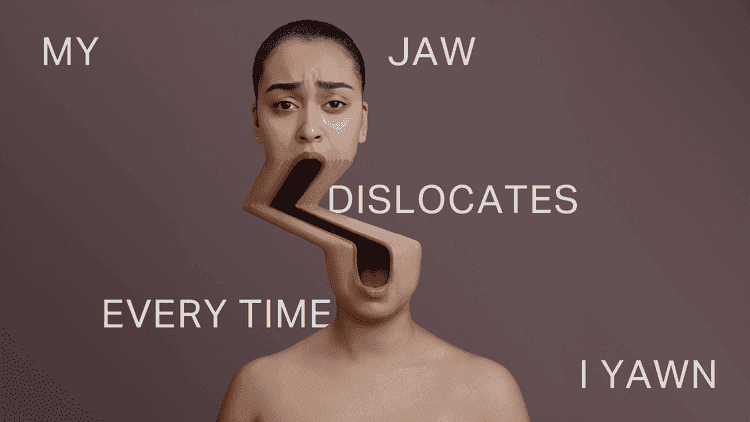
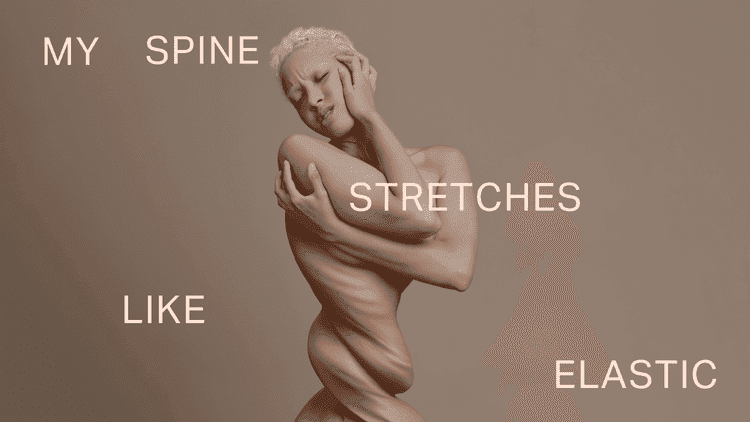
That invisibility was precisely what the "Super Flexible Not Superhuman" campaign set out to change. Developed by branding agency WMH&I, with CGI post-production by POP Creative Studio, the campaign was inspired by Aurora Partridge of music duo TEM-PLE, who received her own EDS diagnosis after a decade of searching for answers. Rather than explaining EDS through diagrams or statistics, the creative concept visualised the lived experience of the condition.
Photographer Kristina Varaksina shot portraits of people with EDS, which POP Creative Studio then transformed through CGI: bodies stretched, compressed, and warped to reflect the chronic pain, joint instability, and physical toll that EDS patients describe every day. The images were paired with direct quotes from people living with the condition, phrases like "I feel like I'm held together with chewing gum" and "My jaw dislocates every time I yawn." The visual distortion made it impossible to look away.
The healthcare marketing campaign ran across social media and UK-wide out-of-home advertising, with a live projection mapping activation at Piccadilly Circus to launch TEM-PLE's charity Christmas single. For healthcare professionals encountering it for the first time, the effect must have been striking: a sudden, embodied understanding of something they may previously have only read about in case notes. Brave creative content does more than inform. It makes you feel the weight of what you are being told.
Photographer - Kristina Varaksina
Art as Internal Language: Graceful Monkey, Daiichi Sankyo and the Hokusai Approach
Creative bravery in healthcare marketing is not limited to public-facing campaigns. Some of the most undervalued opportunities sit inside pharmaceutical and healthcare organisations themselves, in the internal communications meant to inspire staff and connect employees to a shared sense of purpose. Too often, this work is treated as functional rather than creative, and the results reflect that assumption.
The animated film produced by Graceful Monkey for Daiichi Sankyo, in partnership with Saatchi and Saatchi Wellness, makes a persuasive case for a different approach. Commissioned as an internal communications piece, the film tells the story of Daiichi Sankyo as a business, with a specific focus on the development journey of Lixiana, their oral anticoagulant, tracing the ambition, science, and human dedication behind bringing it to market. Rather than presenting this story through conventional corporate formats, the project took its visual inspiration from Katsushika Hokusai, the legendary 19th century Japanese artist whose woodblock prints remain among the most recognised images in art history. Working with illustrator Mat Miller to develop a library of original assets, Graceful Monkey's animation team wove those illustrations into a seamless narrative that carries both cultural depth and genuine visual beauty.
The choice to draw on Hokusai was not decorative. Daiichi Sankyo is a Japanese pharmaceutical company, and grounding the Lixiana story in one of Japan's most celebrated artistic traditions gave the piece real cultural resonance. The result feels specific, considered, and crafted: qualities rarely associated with internal pharma communications, and all the more powerful for it.
This matters because internal audiences are among the hardest to reach. Employees of large pharmaceutical companies develop effective filters for anything generic or performative. A creative content piece that commands genuine attention signals that the organisation believes its own story is worth telling beautifully. Staff engagement in pharma is not a soft metric - it shapes advocacy, culture, and how people connect to the mission of the products they help bring to patients. Graceful Monkey's work for Daiichi Sankyo is proof that animated film, handled with artistic intelligence, can carry that weight.
00:00
03:44
% buffered00:41
What the Healthcare Marketing Industry Can Learn
All three of these creative campaigns share something essential: they trusted the audience. They did not dilute the subject matter or soften its emotional edges. They moved directly toward the hardest truths and found creative forms strong enough to carry them.
For healthcare organisations, patient advocacy groups, and the healthcare marketing agencies that support them, the lesson is clear. Healthcare professionals want creative content that reminds them why their work matters. They respond to healthcare advertising that makes the abstract tangible and speaks to them as the complete human beings they are.
Bravery in healthcare creative campaigns means committing to emotional honesty first, and then finding the form that lets an audience feel it too: whether that is CGI, hand-drawn animation, fine art-inspired film, or something new entirely. The healthcare sector has access to some of the most powerful human stories in existence. The creative studios and agencies working in this space have both the tools and the responsibility to tell those stories with the craft and courage they deserve.
The audience is ready. The only question is whether the industry is brave enough to meet them.
Join the newsletter
Be the first to read our articles.